

Traffic Policy for a Moving Company – Kvalitetsflytt
Kvalitetsflytt’s traffic policy aims to prevent accidents, protect employees and other road users, and ensure the safe transport of the customer’s property. We always plan and carry out driving, loading, and unloading in a way that prioritizes road safety over time pressure.
Road safety during moving transports and in loading zones
Moving assignments often involve driving in urban areas, stopping in loading zones, working close to pedestrians and cyclists, and maneuvering in tight spaces. Therefore, we work with clear procedures for route planning, safe stops, proper loading, and a driving style that reduces risks.
Kvalitetsflytt Stockholm – See what our customers say!
Planning that reduces risks in traffic
We plan routes and schedules to avoid unnecessary stress. When needed, we account for traffic conditions, roadworks, difficult access points, and height/weight restrictions. Good planning reduces the risk of speeding, improper parking, and unsafe situations during unloading.
Safe stops and work in loading zones
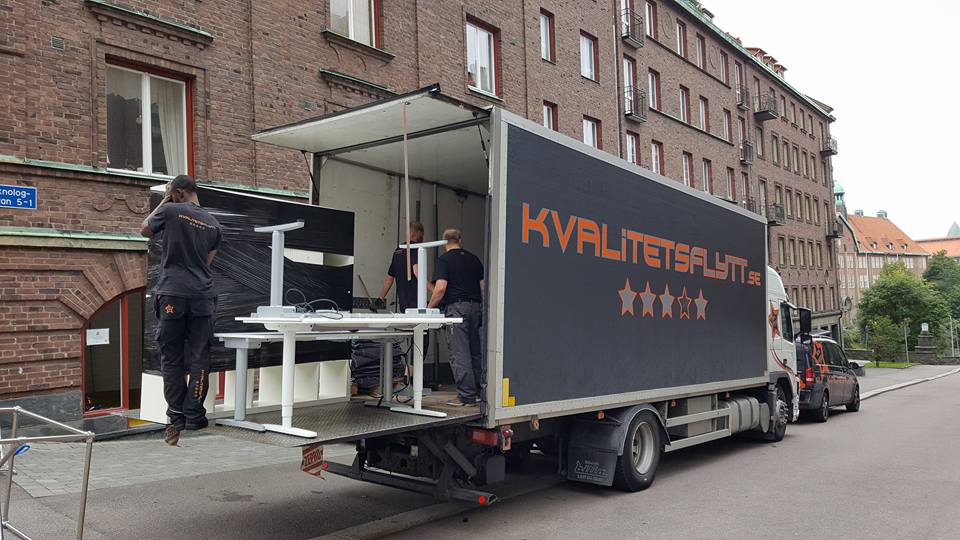
During loading and unloading, the vehicle should be positioned so that it does not create unnecessary risks or obstructions. We use hazard warning lights when appropriate, secure the work area as far as possible, and avoid carrying items across high-traffic areas when alternative carrying routes are available.
Driving behavior, speed, and zero tolerance for risk-taking behavior
We always follow applicable traffic regulations and adjust speed according to road conditions, visibility, load, and surroundings. Defensive driving is standard in our operations, especially in urban areas and when working near schools, residential areas, and pedestrian and cycling routes.
Mobile phone use, seat belts, and fatigue
Seat belts must always be worn. Mobile phones may not be used handheld while driving. If contact is required, hands-free equipment is used or the vehicle is stopped in a safe place. We plan work shifts so that drivers can take breaks and avoid driving when fatigued or otherwise impaired.
Safe loading and load securing during moves
The load must always be secured to minimize the risk of damage to goods, personnel, and vehicles, and to prevent load shifting during braking or cornering.
Procedures for load securing and weight distribution
We work with:
- Correct weight distribution and stable stacking
- Tie-down straps, blankets, and protective materials where needed
- Inspection of the tail lift and cargo area before driving
- Procedures to reduce the risk of falls during loading and unloading
Vehicle inspections and maintenance
Safe vehicles are a fundamental prerequisite. We carry out regular inspections and ensure that servicing and repairs are performed as scheduled. Before driving, we check items such as lighting, tires, mirrors, and that the cargo area is secure.
Alcohol, drugs, and fitness for work in traffic
Kvalitetsflytt has zero tolerance for alcohol and drugs at work. Drivers and employees must be fit for duty and able to act safely and responsibly in traffic. Any medication that may affect driving ability must be handled according to established procedures and reported to management.
Reporting of incidents and improvements
Near misses, incidents, and risk observations must be reported and followed up. The purpose is to prevent recurrence, improve procedures, and create a safer working environment for both staff and the surrounding public.
FAQ about the traffic policy at Kvalitetsflytt

Are your drivers allowed to use mobile phones while driving?
Not handheld. When necessary, hands-free equipment is used, or the vehicle is stopped in a safe place before making contact.
How do you reduce risks during loading and unloading?
Through safe stops, orderly work around the vehicle, planned carrying routes, and procedures to reduce the risk of falls and crushing injuries.
How do you work with load securing?
Through stable packing, even weight distribution, and the use of tie-down straps and protective materials when needed.
What do you do if an incident occurs?
It is reported and followed up so that procedures can be improved and the risk of recurrence is reduced.

PROBABLY SWEDEN’S MOST RECOMMENDED MOVING COMPANY